AI and jobs skills are the focus here: which abilities gain value as AI spreads, and how to build them without panic.
Ask ten people what AI means for jobs and you’ll get ten different answers, from “everyone’s fired” to “nothing will change.” Both are wrong, and the truth is more useful than either. AI doesn’t simply destroy or create jobs in bulk. It changes which tasks inside jobs are valuable — and if you understand that shift, you can prepare for it instead of fearing it.
It’s tasks, not jobs, that change first
Almost no job is a single task. A designer doesn’t just “design” — they meet clients, interpret vague briefs, sketch ideas, revise, present, and manage feedback. AI is already good at some of those steps (generating variations, drafting mockups) and bad at others (understanding what a nervous client actually wants, judging which design fits a brand’s history). Jobs change when the mix of tasks changes, not when a whole profession vanishes overnight.
History backs this up. ATMs didn’t end bank tellers; they changed tellers into advisors. Spreadsheets didn’t end accountants; they changed accounting into analysis. AI will follow the same pattern in most fields: the routine middle of the work gets automated, and the human edges — judgement, relationships, accountability — become more important, not less.
7 skills that gain value
1. Judgement and taste
When anyone can generate ten options in seconds, the valuable skill is picking the right one and explaining why. Editors, reviewers, curators and decision-makers gain leverage, because AI multiplies output but not judgement.
2. Communication
Explaining a complex idea simply, writing a persuasive proposal, handling a difficult conversation — these remain stubbornly human. In fact, they matter more when AI drafts the first version and a human must make it land.
3. Prompting and AI supervision
Knowing how to direct AI tools well — clear prompts, checking outputs, catching errors — is becoming a basic workplace skill, like using a spreadsheet was in the 1990s. Our prompt engineering basics covers the starting point, and AI agents explained shows where supervision is heading.
4. Domain expertise
AI is a generalist. Deep knowledge of a specific field — medicine, law, engineering, teaching, a local market — lets you spot AI errors others miss and ask questions others don’t think to ask. Experts with AI tools outperform both experts without them and AI without experts.
5. Creativity with constraints
Coming up with an idea is now cheap. Coming up with an idea that fits a budget, a brand, a legal limit and a real audience is still hard — and it’s where human creativity earns its keep.
6. Trust and relationships
Clients, patients, students and readers trust people, not outputs. Building and keeping that trust — through honesty, consistency and accountability — is a skill AI can’t fake for long.
7. Learning how to learn
The specific tools will change every year. The ability to pick up a new tool quickly, judge whether it’s worth using, and drop it when something better appears is the meta-skill underneath all the others.
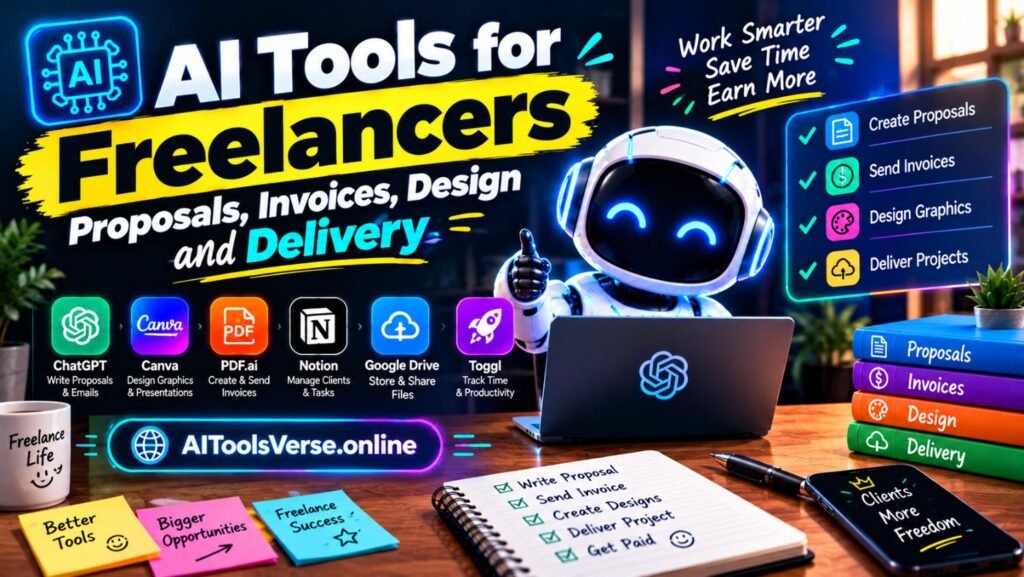
AI and jobs skills also explain which tasks shrink: routine work is easiest to automate, while AI and jobs skills such as judgement and trust are hardest to replace.
Which tasks shrink?
Routine, repetitive, well-defined tasks are the most exposed: basic data entry, first-draft writing of standard documents, simple image resizing, straightforward translations of common phrases. If a task can be described completely in a prompt and checked easily, AI will probably do much of it soon. That doesn’t mean the whole job goes — it means the job’s centre of gravity moves toward the parts AI can’t do.
What this looks like in a real week
Take a junior graphic designer I know. Two years ago, most of her week went on resizing images, making small variations of the same banner, and formatting presentations — exactly the routine work AI now does in minutes. She could have seen that as the end of her job. Instead, she shifted: she now spends her week on the parts clients actually pay for — understanding a brief that a client can barely explain, choosing between three directions and defending the choice, and presenting work in a way that makes a nervous business owner feel confident. She uses AI constantly, for drafts and variations, but the client hires her, not the tool, because the judgement is hers. The same pattern shows up for teachers using AI to draft lesson plans and then spending the saved hour on the struggling student, and for writers using AI for research and then spending the saved afternoon on an interview no chatbot could conduct. In each case the job didn’t vanish; its centre moved toward the human parts, and the people who moved with it are doing better than before.
How to prepare, practically
First, use AI tools in your own work now, so you learn their strengths and failure modes firsthand — including their habit of inventing facts, covered in AI hallucinations. Second, build a visible record of your judgement: a portfolio, a blog, case studies, recommendations — evidence that you don’t just produce output, you make good decisions. Third, deepen one domain rather than skimming ten; depth is what lets you supervise AI well. Fourth, practise the human skills deliberately: present your work, explain your reasoning, handle feedback gracefully. Those are the skills that get harder to automate precisely because they involve other people. A practical first step is your application itself, with the AI tools for resumes and job applications in our guide.
Building AI and jobs skills deliberately, rather than hoping tools alone will carry you, is the practical step that ties this guide together.
For freelancers and small business owners, our guides on AI tools for freelancers and AI tools for small businesses show where AI already saves time without replacing the person. Outbound reading: the World Economic Forum’s Future of Jobs report at https://www.weforum.org and the OECD’s AI and work research at https://www.oecd.org.

In short, AI and jobs skills are not about competing with machines; they are about doing the human parts of work better, with AI handling the rest. That is why AI and jobs skills matter more as tools improve, not less.
Frequently asked questions
Will AI take my job?
It will change parts of almost every job. Whether that helps or hurts you depends largely on whether you learn to work with AI tools and focus on the human parts of your work.
Which jobs are safest?
Jobs built on judgement, relationships, physical skill in unpredictable environments, and accountability — teaching, nursing, skilled trades, creative direction, leadership — are harder to automate than routine desk tasks.
Should young people avoid any career because of AI?
No — but choose careers for the human skills at their core, not just for today’s routine tasks, and expect every career to involve AI tools within a few years.
AI and jobs is not a story about humans versus machines. It’s a story about which human skills become more valuable when machines handle the routine parts. Build those skills — judgement, communication, expertise, trust — and AI becomes something that makes your work better, not something that replaces it.