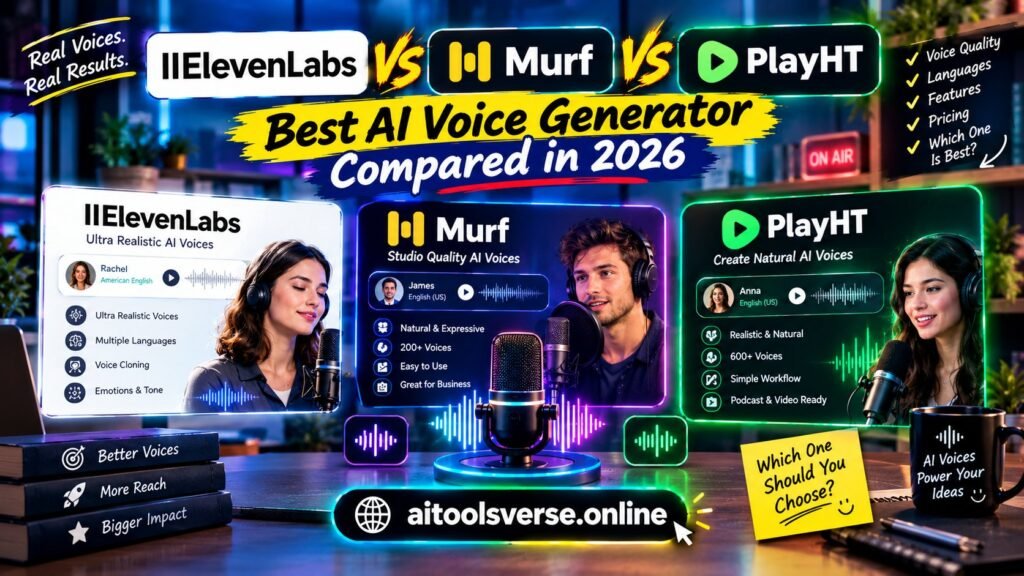
Honestly, picking a voice used to mean booking a studio, a microphone and a lot of retakes. Not any more. This ElevenLabs vs Murf vs PlayHT comparison lines up the three AI voice generators creators reach for most, so you can find the one that fits your project without wasting a trial on the wrong tool. ElevenLabs is the one famous for voices that sound startlingly lifelike, plus voice cloning. Murf feels more like a proper studio, with fine control over pace and emphasis. PlayHT, meanwhile, brings a huge voice library, lots of languages and easy website and podcast publishing. They all turn text into speech, but they do not sound the same, cost the same or suit the same creator. So here is the stuff that actually matters — voice quality, price, languages and ease of use — with a clear pick for YouTubers, podcasters, teachers and businesses.
ElevenLabs vs Murf vs PlayHT: At a Glance
Let’s cut to the chase. ElevenLabs wins on realism — its voices breathe, pause and shift tone in a way that can catch you off guard, and its cloning can rebuild a voice from a short sample. Murf wins on control. Its studio lets you tweak pitch, speed, pauses and emphasis word by word, which is gold when narration has to sound polished and consistent. PlayHT wins on breadth: hundreds of voices, lots of languages, plus tools to turn blog posts into audio and publish podcasts. So really, it’s a trade-off between realism, control and range. If you’re a YouTuber chasing the most natural narration, you’ll probably lean towards ElevenLabs. A business that needs clean, on-brand voiceovers? Murf. A blogger or podcaster juggling languages and easy publishing? PlayHT.
What Is ElevenLabs?
Think of ElevenLabs as the realism specialist. Type or paste your text, pick a voice, and you’ll get audio that sounds surprisingly close to a human recording. It also does dubbing — so a video’s voice can be carried into another language while keeping a similar tone — and there’s a voice library where creators share voices. Where it really earns its reputation is quality: for short-form narration, audiobooks and character voices, it’s hard to beat. The downsides are cost and control. The most lifelike voices sit on paid plans, and while you can adjust stability and style, you don’t get quite the word-by-word studio control Murf gives you. For a deeper look at this tool on its own, see our ElevenLabs guide.
What Is Murf?
Murf is built like a proper voice studio, and it shows. You get a timeline-style editor where you can split text into blocks, give each block a different voice, add pauses, fix pronunciation and nudge speed and pitch until it sits right. There’s also a library of royalty-free music and a simple video editor, so you can pair voice and visuals without jumping to another app. The voices are clear, steady and professional — which is exactly why Murf suits explainer videos, training courses and corporate presentations. Precision is the point here: you can shape every sentence until it sounds just right. The trade-off? Those voices can sound a touch too polished, a little less spontaneous than ElevenLabs, which some listeners love for storytelling and others find less natural for casual content.
What Is PlayHT?
PlayHT is the big-library option. It packs one of the largest voice collections around, covers many languages and accents, and offers realistic, conversational voices plus cloning from a sample. Where it really shines for publishers is workflow: turn a blog post into an audio version, drop an audio player on your site, and push that audio out as a podcast. That’s the strength — range and publishing. If you need the same piece in several languages, or you’d rather your readers listen than read, PlayHT makes it painless. The catch is consistency. With so many voices on offer, quality varies, so finding the one that fits your brand takes a bit of trial and error. And yes, some of its best voices sit on higher-tier plans.
ElevenLabs vs Murf vs PlayHT: Voice Quality Compared
For most buyers, voice quality settles it — and here ElevenLabs usually comes out on top. Its best voices handle emotion, pauses and natural rhythm better than most rivals, which matters a lot for audiobooks, storytelling and long narration. Murf isn’t far behind on clarity and consistency, and for instructional content its steady delivery can actually be easier to follow. PlayHT’s best voices are very good, but its average voice is a notch below the other two, so do test several before you commit. Here’s the practical bit: generate the same 200-word sample in all three tools, listen with headphones, and judge with your audience in mind, not a demo clip picked by the company. A voice that sounds impressive in a demo can feel tiring over a full course or audiobook. For music and audio workflows, also see our Suno AI guide and our Descript guide, which covers editing audio by editing text.
Languages, Voices and Cloning
All three handle lots of languages, but the details are what matter. ElevenLabs has strong multilingual voices and dubbing, which is handy if you want one video in several languages. Murf covers a wide range of languages too, with a focus on professional accents for business and education. PlayHT goes widest of all, which suits publishers serving an international audience. On cloning, ElevenLabs is the name most people know, with instant cloning from a short sample and professional cloning for higher quality. Murf and PlayHT offer cloning as well, though the process and quality vary by plan. Whichever you pick, use cloning responsibly: only clone a voice you own or have clear permission to use, and be upfront about AI-generated audio when your audience would expect a real human voice.
ElevenLabs vs Murf vs PlayHT: Pricing Compared
Now, pricing. It shifts often, so do check the official pricing pages before you buy — but the pattern stays pretty steady. All three give you a free trial or free tier with limited characters, then monthly plans based on how much audio you generate. ElevenLabs tends to cost most for heavy use, because its best voices and cloning sit on higher plans. Murf is priced for professionals and teams, with studio features baked into its main plans. PlayHT is often good value for publishers who need many languages, though its top voices can push the price up too. Don’t judge by the monthly price alone: count the characters or minutes you’ll actually need, check whether unused credits roll over, and test whether the free tier covers a real project. Official pricing and feature details are on the ElevenLabs website, the Murf website and the PlayHT website.
Ease of Use
If you’re a beginner, start with Murf. Honestly, it’s the easiest way to get a polished result fast, because the studio walks you through block by block and shows you exactly what will change. ElevenLabs is just as easy for simple text-to-speech: paste text, pick a voice, generate. It only gets fiddly when you dive into cloning, dubbing and the advanced settings. PlayHT is easy for publishing — turning articles into audio players and podcasts is straightforward — but that huge voice library can feel overwhelming at first. All three run in the browser, with nothing to install, and all three let you download audio in common formats for video editors and podcast tools. If you’re new to AI voices, try a short project in each tool during its trial, and pick the workflow that feels natural, not just the one with the flashiest demo.

Which Tool Is Best for You?
Here’s a quick way to decide. Go with ElevenLabs if voice realism matters most, you need voice cloning or dubbing, or you create audiobooks, storytelling and character-driven content. Go with Murf if you need precise, professional narration, you produce training videos or presentations, or you want a studio that controls every sentence. Go with PlayHT if you publish in many languages, you want to turn blog posts into audio or podcasts, or you need a very large voice library to test. And if you publish the voice content as blog posts as well, optimise the written version with our Surfer SEO vs Frase comparison so the same content can rank and be heard. Still unsure? Start with the free tier of each tool, generate the same sample in all three, and let your ears — and your budget — decide.
Final Verdict: ElevenLabs vs Murf vs PlayHT
So, is there one clear winner? Not really — and that’s the honest answer. Each tool leads somewhere different. ElevenLabs wins on realism and cloning. Murf wins on studio control and professional polish. PlayHT wins on language range and publishing. For most creators, ElevenLabs is the safest first try if the budget stretches to it, Murf is the best fit for business narration, and PlayHT is the one to pick for multilingual publishing. Whichever you go with, keep one rule in mind: AI voices are a tool, not a substitute for a good script. Write clearly, edit for listening, test with real listeners, and disclose AI-generated audio where honesty calls for it.
Frequently Asked Questions
Can I use AI voices for YouTube monetisation?
Yes, in most cases — but there’s a catch. YouTube and other platforms have rules about reused and AI-generated content, so don’t just upload a robotic read of someone else’s script and expect it to fly. Use original scripts, add real value with visuals and editing, and check the platform’s current policy before you rely on AI narration alone.
Do I own the audio I generate?
Generally, yes — paid plans usually give you commercial rights to the audio you generate. But terms differ by tool and plan, so it’s worth a quick read of the licence for your plan before you use audio in paid products, ads or client work. Don’t assume; check.
Which tool sounds most human?
For most listeners, ElevenLabs — especially for storytelling and emotional narration. Murf sounds the most consistently professional, and PlayHT’s best voices aren’t far behind. Still, your own script is the real test, so try it in each tool before you decide.
At the end of the day, ElevenLabs vs Murf vs PlayHT comes down to realism, control and range. Before you buy, run the same script through each tool and listen properly — headphones on, full passage, not just a demo clip. That one test will tell you more than any comparison, including this one. And the winner for you? It’ll be the voice your listeners actually enjoy hearing.